Overcoming limited beliefs 💚

Nothing has me smiling from ear to ear for 90 minutes like Shrek. Not only is the soundtrack incredible, but the mesh of characters, life lessons and humour make it nothing short of a ✨masterpiece✨
It's a moving story of self-love, courage, limited beliefs, miscommunication, how ego can ruin a good thing, choosing deep connections over shallow, safe or comfortable choices.. and the list goes on. It's one of my comfort movies <3
tl;dr - you wish mate
How each character shows up
Shrek’s self-loathing and self-sabotage
- Shrek: Once upon a time there was a lovely princess. But she had an enchantment upon her of a fearful sort which could only be broken by love's first kiss. She was locked away in a castle guarded by a terrible fire-breathing dragon. Many brave knights had attempted to free her from this dreadful prison; but none prevailed. She waited in the dragon's keep in the highest room of the tallest tower. For her true love and true love's first kiss... huh like that's ever gonna happen. What a loada *toilet flushes*
- Shrek: They judge me before they even know me - that's why I'm better off alone.
- Shrek: This is the part where you run away.
- Donkey: You're so wrapped up in layers onion boy, you're scared of your own feelings!
- Donkey: Wake up and smell the pheromones!
- Donkey: There you are, doing it again, just like you did to Fiona. All she ever did was like you, maybe even love you!
- Shrek: You know, Donkey, sometimes things are more than they appear.
Donkey’s incessant need for connection
- Shrek: Well, it’s no wonder you don’t have any friends.
- Donkey: We can stay up late, swapping manly stories, and in the morning, I'm making waffles.
- Donkey: You don’t know what it’s like to be considered a freak.. well, maybe you do, but that’s why we gotta stick together.
- Donkey: Look, if you wanted to be alone, all you had to do was ask.

Shrek is extremely cynical. The treatment he's endured due to his appearance has caused him to retreat, where he's convinced himself he's better off alone. Pushing people away, settling for less and isolating seem to be the easier option. Although Donkey's need to feel loved, needed and seen are similar to Shrek's at his core, they've both responded to neglect differently - resulting in Shrek leaning avoidant and Donkey leaning anxious.
Fionas insecurities
- Fiona: But I have to be rescued by my true love… not an ogre and his pet!
- Fiona: But Donkey, I'm a princess! And this is not how a princess is supposed to look.
- Fiona: I don't understand. I'm supposed to be beautiful.
Princess Fiona is an interestingly complex character. Although she's stubborn, she's also confident, raw, unfiltered and knows what she wants. Her deep insecurities around her appearance are understandable and her need to be chosen ties to her need to break the spell. She'll gladly settle for Farquad aslong as it means this part of her is 'fixed'. Her stubbornness also contributes to this, but I'll give her a pass because men should pursue, her parents were nowhere to be seen and she tried to communicate, but the misunderstandings caused friction and distance.
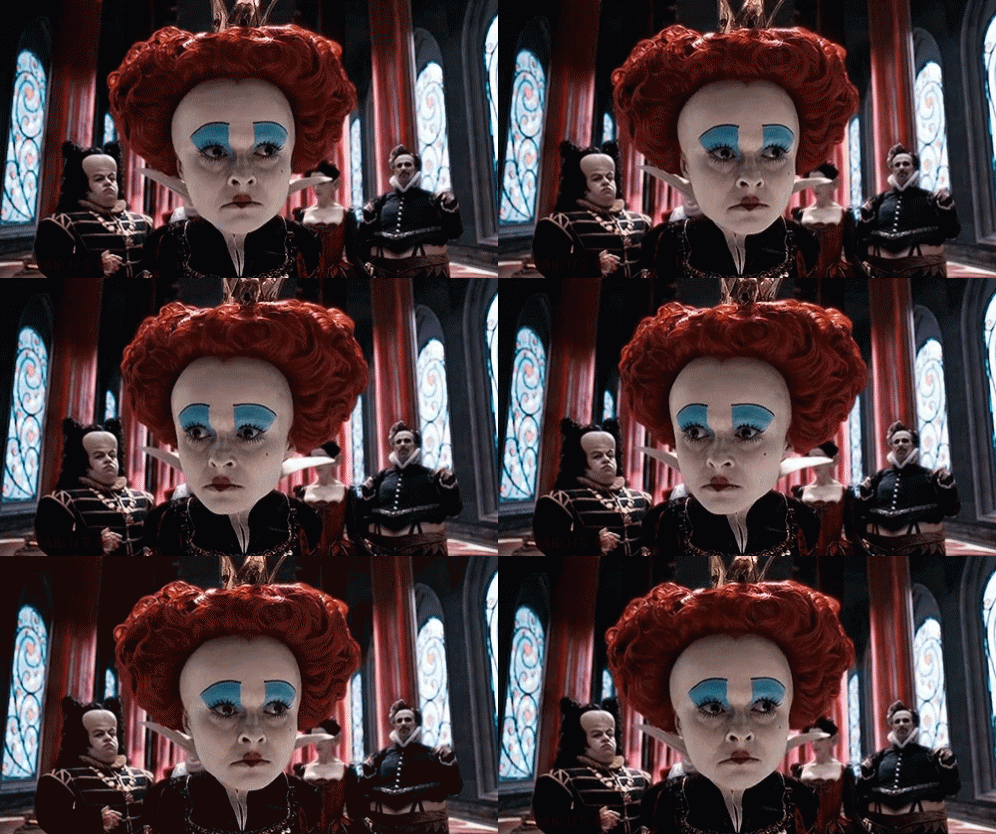
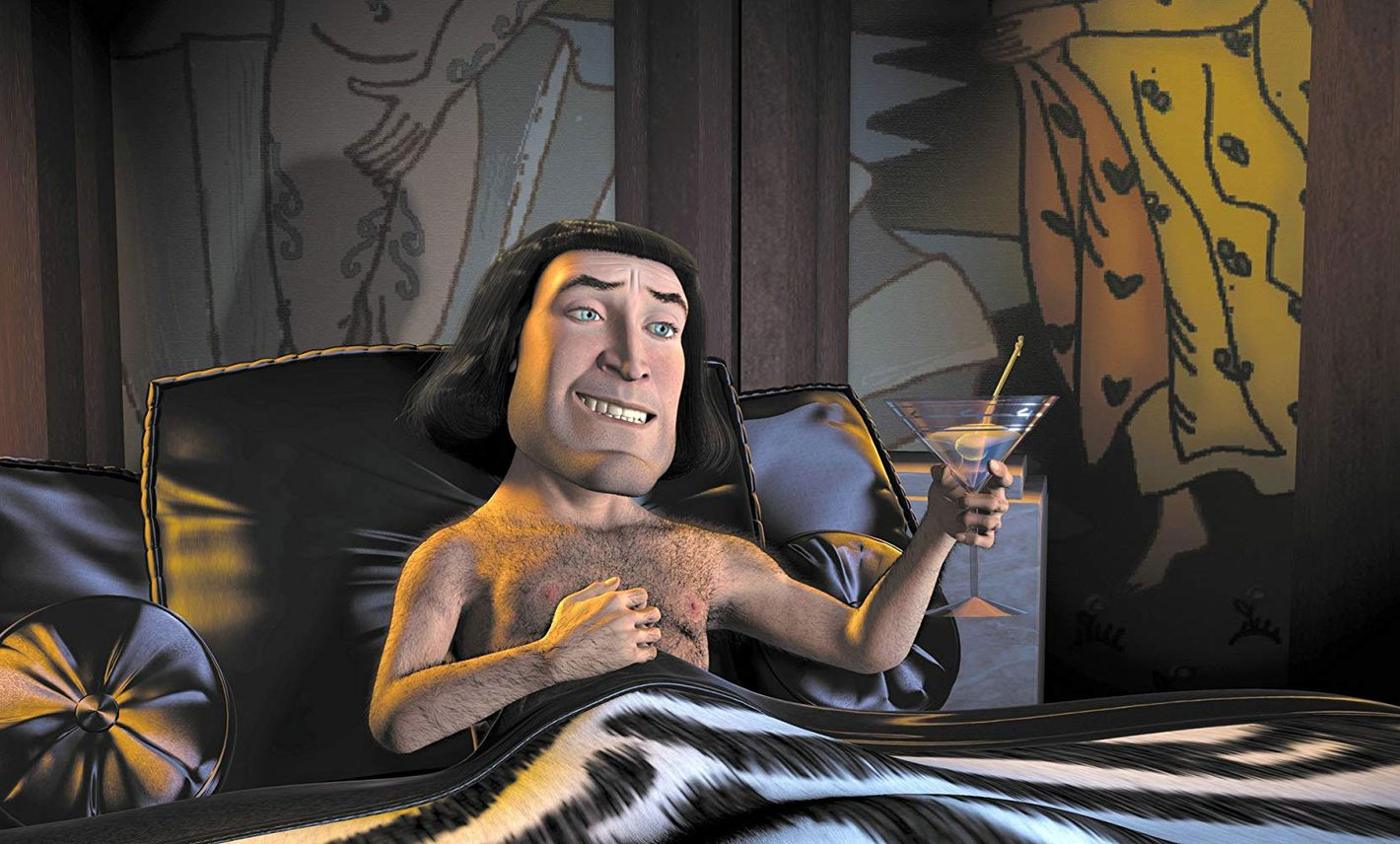
Farquard, the narc
- Farquad: Some of you may die but it's a sacrifice I'm willing to make.
- Shrek: Do you think maybe he's compensating for something hehe
- Farquad: Ugh, what's that, it's hideous?! Shrek: Well that's not very nice, he's just a donkey.
- Farquad: Really, it's rude enough being alive when no one wants you.
- Donkey: Huh, celebrity marriages. They never last, do they?
As hilarious as his character is [because he's pathetic], Farquard is the ultimate narcissist. His huge ego is fuelled by his lack of power, height and validation. It's shown through his need to control to the point of ensuring crowds respond correctly to his carefully curated cues. He's cruel, erratic, selfish, manipulative, condescending, lacks any ounce of empathy and.. essentially a brat - and the accent only intensifies this.
Attachment Theory
Attachment theory has become pretty mainstream over the past few years - anxious this, avoidant that, beware of the narcs! As a result, we’ve all become self-proclaimed psychologists and can point out vice loud and clear in others, hardly recognising these traits in ourselves. This isn’t a thought piece to dissect other’s behaviours, rather our own - rectifying ourselves so we can elevate, thus attracting those on a similar frequency.
Avoidantly attached people often run from the things they want most, not because they don't care, but because they care more than they're comfortable admitting. Beneath the surface is often a fear of emotional depth, rejection [someone will eventually see them fully and leave as a result] or a perceived inadequacy rooted in abandonment wounds. Rather than risk that pain, they sabotage the connection before it has a chance to grow, convincing themselves it's best this way. In doing so, they're protecting themselves from the belief that the more they care, the more they'll hurt. This leads them towards relationships or opportunities that are less triggering, feel easier, convenient and emotionally undemanding over what requires growth. And.. they hop from one distraction to another, repeating this cycle until they're sick of themselves, because at its core they're avoiding the inner work needed to sustain the very connection they desire. There's a flair of passivity to this pattern - they let life happen to them. They're chosen instead of choosing. The sad reality is that people who settle in love usually settle in life as both are rooted in low self-worth.
'He pushes people away before they have a chance to leave him.. it’s a defence mechanism'
What causes this behaviour?
Many men lean avoidant because as boys they're often taught not how to be men but how not to be women, reinforcing the idea that emotions, domestic chores and consideration are weaknesses. The shame often results in them not liking women and their innate qualities - hence insults like simp. This aspect of patriarchy has contributed to emotionally repressed, nonchalant men, fuelling the male loneliness epidemic and making it difficult for them to form relationships that aren't transactional or shallow. They succumb to peer pressure, where they’d much rather impress their boys than pursue their own desires. As a result, they’re seen as the less emotional sex, however it’s simply suppressed and eventually comes out in ugly ways.
Additionally, many tie their self-worth to their careers and financial status, questioning whether they have anything 'worthy' to offer the person they truly want. Patriarchy instils the notion that men need to offer something material to be useful, ultimately commodifying themselves.. and the women around them. A hyper focus on material possessions results in dismissing character and emotional availability, which is the foundation of all healthy relationships. What good is financial security without emotional availability? Ironically, they dismiss it in themselves, yet seek it out in others. This outlook could also stem from deeper childhood wounds, where positive affirmations they received from parental figures were transactional or conditional, otherwise neglect was the standard. This can result in hyper independence alongside a sense of innate unworthiness, and hyper independence ultimately results in emotional vigilance. Their self-reliance becomes a survival strategy - learning that needing people wasn’t safe.. so they stopped. Subsequently, their relationships with women become transactional. Ask a man what he likes about the women in his life and he’ll list things she does for him, not innate virtues. The convenience that women provide by being readily available and seeking validation from men only intensifies this - its own form of internalised misogyny. This combination of low self-worth and shame results in a fear of rejection and vulnerability, which we can see through Shrek’s choices.
To be guarded in love is to only half love, to love truly is to risk heartbreak
How it presents in relationships
Partner selection:
- Sabotage the ‘dream girl’ - they may run from the woman they genuinely want because she represents a version of themselves that they don't believe they're capable of offering - deep down he doesn’t believe she deserves this version of him. Shame, inadequacy, rejection and the expectation of eventually hurting her can cause them to sabotage it. It could also simply be looking foolish for reaching for someone who won’t reach back. She’s someone he highly respects and as a result feels out of reach. As George states about Queen Charlotte, 'If she were dull, I might feel myself up to the task. Instead, her brilliance shows the troll I am. Her perfection is matched only by my deformity.' George believes keeping her at a distance is the only way to protect her from himself. Regardless, avoidants will orbit her from a safe distance, emotionally keeping tabs without risking vulnerability. The feelings don't disappear - they arrive later and land harder, often leaving her with the pain and confusion of what they were unwilling to face. If you're not his preference when he has a pocket full of money and a bright future [which is never guaranteed], you may be a placeholder rather than his genuine choice. The dream girl doesn't necessarily win, neither does the pick me nor the placeholder.
- Choose people who allow them to remain wounded - someone who doesn't require change and tolerates the parts of themselves they struggle to accept. The more a partner self-abandons for them, the more they may lose respect for them or resent them for loving parts of them they themselves hate. Men who hate themselves often punish women for loving them. Society reinforces this by allowing their behaviour to continue without consequence.
- Seek motherly figures and over-givers subconsciously - someone who offers the unconditional love they didn't receive as a child, usually loving them more than they love themselves.
- Test their partner - subconsciously make their partners prove they won't leave by testing them with distance to see if they chase.
- Settle out of fear of being alone - choosing convenience over fulfilment, particularly where their needs are met sexually and domestically. A partner can become a placeholder until they feel capable of pursuing the woman they truly want, creating transactional and unhappy dynamics.
Relationship dynamics and emotional withdrawal:
- Subconsciously love bomb in the early stages - finally feeling heard, seen and understood could be mistaken for love. Because they deem themselves unlikeable, the excitement of someone showing interest results in them being caught in the infatuation of it all. They want to snap up the only 'realistic' option in their eyes. Others may feel the need to manipulatively fake their personality to be liked, perpetuating the patriarchal notion of a honeymoon phase. When you actually like each other, you increase in love and admiration over time because you know more about the other to admire.
- Fear emotional dependence - needing someone can feel like a loss of control. They may choose dynamics where they feel in control, emotions don't override logic and someone cares for them more than they care.
- Struggle with emotional intimacy - difficulty expressing themselves limits the depth of their connections. They may show love through kindness or provision and not understand why this isn't enough, creating a misalignment of needs. Some even substitute grand gestures for genuine emotional intimacy because it's easier to perform affection than to be truly seen. Similarly, this may be the reason why they show others more cordiality than their partners. This can also extend to the bedroom over time - deep eye contact, passionate kissing and non-sexual touch can feel more intimate than sex itself, so are avoided. They're often the ‘good guy’ - not necessarily doing anything wrong but providing the bare minimum while their partner remains unfulfilled by the lack of depth. We see this with Fleabag, who uses sex as a form of escapism. When the priest sees beyond her walls and states that he just wants to get to know her, she uncomfortably snaps back with 'well I don't want that', although it's clear she deeply craves it.
- Struggle with accountability because criticism activates shame - deflect because criticism feels like an attack or pressure rather than an opportunity for reflection.
- Withdraw or ghost when confronted - a partner's dissatisfaction can confirm what they already believe about themselves, causing shame and guilt to override their ability to stay present. Her needs become demands on someone who already feels unworthy, so walking away feels easier than facing themselves. Situationships can offer connection without emotional attachment, which they tend to prefer.
- Control when abandonment feels imminent - fear of being left can manifest as jealousy, control or attempts to regulate the relationship rather than process the fear underneath it. This could extend to what their partner wears, who they spend time with and how bubbly they are publicly. They may envy their partner’s achievements or progress and subtly humble them out of fear that they may leave for someone better or to match their own level of self esteem.
Sabotage:
- The slow fade - some slowly withdraw, expecting their partner to eventually leave them. They may rarely leave a marriage because they don't believe anyone else will want them unless they already have someone lined up. Some may not want to look like the 'bad guy' by leaving, but that leans towards narcissism as it's rooted in the preservation of their reputation. Another extreme is what we now call 'alpine divorce'. Where they take a hike with their partner, only to leave them in the middle of nowhere and.. hope they don't make it back. Essentially pre-meditated murder. Unfortunately, this is common enough that it continues to be spoken about on social media.
- Infidelity - where misogyny or patriarchy aren’t at play, shame, low self-worth and easy access to others online can contribute to this. They may sabotage relationships in this way because they expect them to end anyway, struggling to trust that someone will stay without having something to offer. Or the pressure of the relationship causes them to seek validation from an easier source to regulate uncomfortable emotions rather than process grief, shame, loneliness or vulnerability. High chance that they were probably seeking validation from multiple sources prior and it’s become a habit/dopamine hit. This doesn't happen by accident, it's a very conscious decision.
We were doing so well, but you were scared to be held
Took the easiest way out
I see the tears of a man too proud to reach for a hand
Well, let my love keep you safe now
It almost sounds like insecurities wrapped in ego with a bow on top, resulting in emotional abuse if left unchecked. If we raise our boys to be self-serving and inconsiderate, that’s exactly what they’ll bring into future relationships. What incentive do men have to change if their behaviour is considered acceptable unless forced through consequence?
Anxiously attached people on the other hand overextend themselves, crossing their own boundaries in the pursuit of connection - many times to the point of self-abandonment. Overthinking every interaction to the point of paralysis [digital communication makes this 10x worse] and the constant need for reassurance usually stems from a deeper fear of not being chosen. What starts as a desire to be seen can quietly turn into choosing others from a place of loneliness rather than genuine compatibility, turning connections into a form of emotional escapism and focusing on potential. The nature of an avoidant can make anxious folk feel special, because the attention given may be reserved just for them. It can become almost performative, where our main concern becomes needing someone to choose us, regardless of whether we admire them. Not coming from a place of I like you, rather I like that you like me.
What causes this behaviour?
The lack of attention or emotional availability from father figures can lead women to seek validation and connection from other male figures. Women are often shamed for having ‘daddy issues’, yet the root lies in men who failed to instil a strong sense of self through their presence and involvement rather than the women themselves. Another example of men blaming women for the consequences of their own failures. Women who experience this tend to either become hyper independent or hyper dependent, both extremes are two sides of same coin. If we don't teach our girls self-respect, they may learn it at the hands of a man, potentially putting themselves in danger just to feel desired. Male centred women are some of the most dangerous women to be around as they'll happily put themselves and the women around them at risk for attention. Men aren’t the ones coming to save us, they seem to be the ones doing the damage.
When you aren’t fed love on a silver spoon, you’ll learn to lick it off a knife
This vulnerability is reinforced by industries that have profited from our insecurities for decades, commodifying self-love while simultaneously teaching us that beauty is pain and our worth is something to be earned. Capitalism can't profit from secure individuals, so we're encouraged to remain forever youthful - have our nails done, hair retouched, fix the sag and wrinkles, essentially catering to the male gaze. Body positivity has ironically become more about aesthetics than health or self-assurance, creating a dependency on material possessions to make us feel desired. It's repackaged materialism and vanity on steroids. These pressures affect men and women alike, with neither being fully satisfied.
From a young age, women are also taught to succumb to patriarchal roles through toys relating to caregiving roles and household chores. We're conditioned to act and speak a certain way and suppress our needs, desires and boundaries in pursuit of love, effectively grooming ourselves to bend over backwards at the expense of our health, happiness and self-respect. We're taught to wait to be chosen, settle, play bob the builder or therapist, tolerate weaponised incompetence and endure mistreatment despite our better judgment. We're often deemed useless or unworthy if not attached to a man or child. As a result, women often lose themselves in marriage and motherhood, not knowing who they are when not attached to either. Even in the workplace, many women feel they have to prove themselves or overcompensate, particularly in male-dominated fields, to be taken seriously. Women are criticised for far less than men are. Factors such as age, beauty and ‘biological clock’ can further pressure women to settle for relationships that don't truly fulfil them - the idea of marriage becomes something women desire more than the qualities of their spouse, as we see with Fiona.
Our current climate has given women the ability to want not need and as a result, men who are unable to step up where it matters are being left by the wayside, causing a surge in toxic masculinity. When research suggests that marriage can add at least seven extra hours of housework per week for women, it's not difficult to understand why many now seek committed relationships beyond financial security, patriarchal norms or of a transactional nature. Who we choose can reflect where we're abandoning ourselves, creating the irony of trying to convince others of our worth, while struggling to uphold it internally.
How it presents in relationships
Partner selection:
- Choose relationships where they must earn love - women can spend their whole lives trying to be chosen, so they may stay longer than they should, sacrifice needs to keep a man and do things they otherwise wouldn't.
Relationship dynamics:
- Over-give, then resent the imbalance - over-initiating and doing everything for a partner creates a dynamic where one person continually over-functions and the other under-functions. If a woman has to drag it out of him, she becomes the doer and initiator, setting the tone of the relationship. She may later complain that he never gives what she never allowed him to initiate.
- Rely on their partner to regulate their emotions - their emotions become tied to their partner, needing constant reassurance and validation because they struggle to source it outside the relationship, or expecting their partner to provide a constant sense of excitement that is otherwise missing from their life. Their sense of stability and self-worth increasingly depends on the relationship as they’ve made it the centre of their life.
- Teach him how to be a man - basic consideration, researching how he should heal or trying to teach him how to show up instead of allowing him to do that work himself. You may be asking something from him that he has never done or doesn’t have the capacity or willingness to give.
- Love as service can become martyrdom - when sacrifice is praised so deeply it can blur into self-abandonment. Love should protect both people, not erase one. 'I picked you because you picked me over you.'
Emotional withdrawal/the response to distance:
- Become overly communicative - repeatedly explaining, discussing and trying to resolve the relationship because silence feels threatening, rather than giving space for the other person to process. Eventually being labelled as the nagging or dramatic wife even when giving healthy communication. Men don’t nag because when it’s evident that something isn't going to change, they tend to leave.
- Neglect makes them chase - when a partner withdraws, they pursue harder rather than stepping back and asking what the dynamic is telling them. When eventually given crumbs, they become so overjoyed they forget this should be the standard and begin waiting for the next dopamine hit. In these dynamics, this usually happens as a result of an ultimatum and dies down until another is given, resulting in a push-pull cycle of intentional breadcrumbing.
- Their partner's reassurance is never enough - reassurance temporarily soothes the anxiety but doesn't resolve the underlying fear, so they need it repeatedly.
- Shrink their needs when the partner withdraws - when their partner shuts down and disappears, over time they may eventually stop asking for what they need altogether, shrinking themselves to avoid pushing them further away - pulling out their people pleasing nature even more.
Insecurity and control:
- Struggle with trust and privacy- fear of betrayal can lead to envy, control and accusations of infidelity, scouring their partner's phone or monitoring or managing them 24/7 rather than tolerating uncertainty and allowing the relationship to reveal itself. Anxiety turns uncertainty into surveillance, with the belief that knowing everything will prevent abandonment, thus confusing control with security.
- Suffocate the relationship - constant communication, reassurance-seeking, monitoring and emotional dependence can make the relationship feel increasingly claustrophobic, ironically creating the distance they fear. Rather than recognising that something isn't for them, they may try to control every outcome, know everyone and everything and as a result become codependent. People seem very big when our world is very small, expand yourself.
Sabotage:
- Fear of abandonment keeps them in situations that are actively hurting them - instead of recognising incompatibility or unmet needs, they may beg their partner to change and continue trying to make the relationship work at the expense of themselves, including relationships where they are neglected or unsupported. The fear of losing the relationship can become so strong that the person starts losing themselves instead.
- The never ending cycle - their partner's withdrawal causes them to chase, their chasing causes the partner to withdraw further creating a vicious cycle. Eventually, they may shrink their needs, stop asking and mistake survival of the relationship for success.
- Forget to point the finger inward - anxious women who believe they're self-aware can become so focused on naming and fixing their partner's wounds that they overlook their own. If their partner actually healed, they may outgrow them and eventually leave. What currently aligns them is that they're both wounded, not that only one of them needs fixing.
- Spiritual bypassing - they may distract themselves with deen to escape from the courage they'd need to gain to make a decision. Taking abuse isn't a badge of honour or 'sabr', it's disrespectful to yourself.
We can clearly see the overlap with both attachment styles, showcasing the same underlying struggle of self-worth, just expressed differently. Anxious lot have avoidant relationships with themselves, while avoidants have anxious relationships with themselves. Avoidants feel emotionally safe through distance and control of their feelings while anxiously attached folk draw near to feel loved. Neglect causes one to run and the other to chase. Their biggest fear is abandonment, which is why they need to feel needed in relationships. Ironically, they attract the other. Although they can learn valuable lessons from each other, this dynamic can potentially become abusive if left unchecked, verbal or otherwise.
With the slew of hatred for avoidants, it’s important to point out that avoidants aren’t trying to hurt anyone, they're operating from a place of self-preservation based on wounds. The issue occurs when conscious manipulation, gaslighting and abuse are added to the mix - leading to narcissistic tendencies. Narcissists are avoidant at their core.
Narcissists are a different breed - they’re an extreme of both. They crave power, control and validation. They struggle to form genuine connections and often view love as weakness, reducing relationships to transactions that serve their ego - as seen in the case of Farquad who takes but rarely gives. By isolating partners and fostering dependency, they create conditions that exploit someone's inability to leave, creating a bedrock for abuse. If they can't control someone directly, they'll often try to control the narrative about them. Despite thinking they have the upper hand, they create a cage of their own making by stripping themselves of love - ultimately trapped in a constant battle with themselves. Not all narcissists exhibit these traits outwardly though. Some are charming, charismatic and socially adored. They've mastered appearances and manipulation because their image is their lifeline. They're nice, not kind. The person seen as virtuous, respected or deeply religious in public can very well be abusive behind closed doors. At their core, they're often bullies seeking power where they can find it, using control over others to compensate for feelings of inadequacy elsewhere. If a narcissist hates you, take it as a badge of honour. They hate what they can’t control or manipulate.
Confidence is quiet, insecurities are loud 📣 📣 📣
How do we heal?
Our relationship with ourselves
First things first, our queen farah said it best:
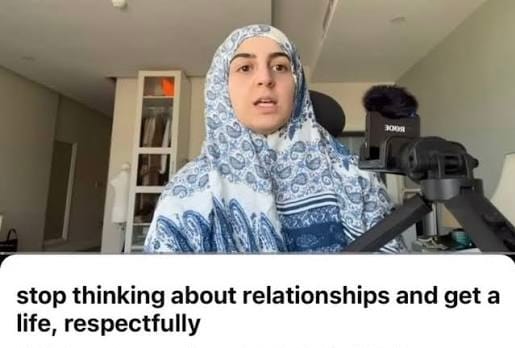
you are not craving a person, you are craving a feeling.
name the feeling, build the feeling within yourself, then see who shows up.
Despite our deep wounds and insecurities, our root needs are the same - we all want some form of genuine companionship. The ability to share a part of our lives, while feeling safe in someone's presence is not only comforting but can also be a catalyst for growth. But what we shouldn't do is wait for it, think it'll fix us or treat it as a be all end all. It's the difference between needing a relationship vs wanting one as an addition to an already fulfilling life. Our rizq is written, we don't need to chase or act from a place of desperation. We need to do the internal work that builds the capacity to attract and maintain what God has in store for us. The work we've done on ourselves while single becomes the standard we carry forward into marriage - we shouldn't need to be told what to do, we should already be living it. When we're strong in deen, we're drawn to those on a similar path because we're naturally pulled to those who share the same foundational values as us. Ultimately, our relationships are a means to God and one of the determining factors of success - our make or break, shaping the trajectory of our life for better or worse.
Let love find you in your living, not your longing
Our relationship with others
Meaningful relationships cannot exist without emotional availability, yet in a culture where one of the few socially acceptable forms of physical touch between men is through something like BJJ, openly expressing a need for closeness can still feel taboo. As life becomes increasingly isolated and online, this creates another barrier to connection. Physical touch, vulnerability and emotional support are human needs, not weaknesses. Hug your bros, tell them you love them and show up when they're struggling. We should be able to hold one another without shame or immediate regret. That's secure, healthy masculinity. These friendships often become the blueprint for healthy romantic relationships because they teach consideration, trust and how to care for someone unconditionally. Women often find this easier because softness and emotional openness are generally accepted within female friendships, making emotional availability easier to carry into romantic relationships. Because of patriarchy men are living a much harder life internally while women are living a much harder life externally.
The walls we build to keep the pain out also keep the joy out
On the other side of the spectrum, people need to learn how to pursue connection without slipping into co-dependency. Not losing ourselves within relationships by having a life of our own outside any connection is key. Overthinking can become a form of waswasa, trapping us in cycles of doubt and making us scan for rejection even when it isn't there. How others treat us is a reflection of them and how we treat others is a reflection of us. Understanding this helps reduce the rumination and placing the blame on ourselves for the actions of others. A healthy approach is to assume people want to stay unless they've given us reason to believe otherwise. Face-to-face communication also provides a level of clarity that digital communication simply can't, especially for those of us who are notoriously dry texters [guilty]. At the very least, important conversations deserve the clarity of being had in person where possible.
- Donkey: Alright nobody move, I've got a dragon and I'm not afraid to use it. I'm a donkey on the edge!
- Donkey: Wow! Only a true friend would be that cruelly honest.
- Donkey: Because that’s what friends do, they forgive each other!
- Shrek: After a while, you learn to ignore the names people call you and just trust who you are.
- Shrek: But you are beautiful.
Choosing to walk away and remaining alone would have been the easier option for Shrek, whilst Fiona's would have been marrying Farquad. His friendship with donkey forces him to face his insecurities, his fear of vulnerability and the struggle between his head and heart. As a result, he understood that his worth was no longer attached to how he was perceived, his lifestyle or other shallow factors. He began to understand the importance of giving himself the unconditional love he extended to Fiona. If we don't have the capacity to love ourselves with all our shortcomings, how will we know how to pour into others? Shrek saw his own lack, did the internal work and went after what he wanted, with his chest, because the minor discomfort of embarrassing himself didn't outweigh his desire for deep connection and his ✨dream girl✨ As a result, he was able to help Fiona see the beauty in her form despite her deep-set insecurities. Admiration and respect naturally instil a strong sense of loyalty and devotion that surpasses anything short term or shallow, resulting in a healthy dynamic which creates a baseline for growth. Superficiality and mistreatment are removed from the equation by default. Farquard could never.
If the purpose of a relationship is for people to be healed and healing can only occur when our wounds are revealed, the ego confronts us with a terrible catch-22. If I don't show myself, there can be no growth. Without growth, there will ultimately be boredom, which is death for the relationship. But if I do reveal myself honestly, then I might appear unattractive and my partner will leave. The ego's narcissism has us waiting for the perfect person to appear. The holy spirit knows that the search for perfection in another is just a smokescreen that hides our need to develop the perfect within ourselves. And if there is a perfect person out there, which there isn't, would they date you?
Return to Love - Marianne Williamson
How we show up for others is one of the clearest indications of how we feel about them. Feelings alone aren't enough - they must be reflected in our actions. Introspection determines how we'll respond when wounds crop up, helping us avoid hurting others through our action or inaction. Conflict is inevitable, but repair is what builds intimacy and is the real determiner of the success of a relationship. Through healthy communication, the ability to stay instead of run, to address issues before resentment takes root and to recognise bids for connection even in discomfort, we're able to build emotional safety rooted in trust, consistency and mutual respect. All love languages should be given freely at a basic level in all relationships, any extra is what we've missed out on in our youth and should be communicated over time. Feeling safe enough to reveal our fears and insecurities, knowing they'll be met with care rather than criticism allows intimacy to deepen and relationships to soften all involved. People who care may not be able to give us everything, but they'll be honest about their limitations and show attempts at repair. Humility is key for repair and growth. The right person won't just love us but expand our capacity to love ourselves, our growth, our passions and our potential.
A healthy relationship keeps the windows and doors open. Plenty of air circulates and neither person feels trapped
Real love isn't built on perfection but on the willingness to see someone fully, with all their vice, and stay. It asks us to be gentle, accountable and consistent. It scares people because it requires an ego death, where being right becomes less important than being loving. Someone who truly loves us will make a genuine effort to change their behaviour the moment they recognise it hurts us, they won't need to be repeatedly asked to care. When we feel safe enough to love deeply, we begin to soften, apologise, adjust and move with consideration rather than obligation. Growth in love is about becoming someone capable of holding love responsibly without control. Love makes people gentle. They're careful, almost scared they'll ruin it. They walk with soft hands and an even softer tone, without stripping them of who they are. Men will move heaven and earth for that one girl. They completely soften in her presence with an instinctual need to provide written all over their face - without it feeling like a chore or a burden. They get satisfaction from investing in and providing for the women around them. The eyes chico, a real give away. They couldn't hide it if they tried.
Ultimately, relationships of all kinds help us grow in ways we don't realise we need. They expose our patterns, challenge our assumptions and force us to reflect on how we think, react and show up for ourselves and others. They act as a mirror. Isolation rarely heals - it creates resentment, friction, emotional stagnation, in turn blocking growth, delaying pain and causing long term health issues. Other characters on screen repeatedly show us that we soften through connection, rather than solitude. Damon [TVD] was profoundly shaped by his relationships with Liz, Bonnie, Elena, and Stefan, while characters like Daryl, Negan [TWD] and Sawyer [Lost] were softened by the communities around them. They began cold, erratic and somewhat hyper independent, but through care, accountability and genuine connection, they became better versions of themselves. We also see this through Mr Darcy in Pride and Prejudice. Although he began as a pompous snob with social anxiety, through interactions with Elizabeth, he recognised his own conceit and arrogance, took accountability, used his privilege to rectify his mistakes and softened so he could be worthy of someone he truly loved. As a result, Elizabeth overcame her prejudice, leading to emotional maturity and humility within both characters. Neither Elizabeth nor Fiona went into saviour mode - Darcy and Shrek fixed themselves on their own accord to offer a worthy seat for someone they loved. What heals us are deep, emotionally available connections, platonic or otherwise.
The capacity to be alone is the capacity to love. It may look paradoxical to you, but it's not. It is an existential truth - only those who are capable of being alone are capable of love, of sharing, of going into the deepest core of another person - without possessing the other, without becoming dependent on the other, without reducing the other to a thing and without becoming addicted to the other. They allow the other absolute freedom because they know that if the other leaves, they will be as happy as they are now. Their happiness cannot be taken by the other because it is not given by the other.
Many of us have been conditioned to believe that love must be earned, endured, or worse yet, that love is pain. Healthy love nurtures, heals and builds both people through a steady, respectful and secure connection, not one built on infatuation, obsession and chaos. We need not confuse intensity with instability. There's a level of difficulty relationships shouldn't cross, where love becomes self-erasure and survival replaces connection. We can be loving, supportive and even a source of inspiration, but we can't heal, fix, or force growth into someone else. That burden was never ours to carry.
Self abandonment
We live in a culture that rewards transactional relationships, where control, performance and what someone can provide can be mistaken for love. We can enjoy someone and convince ourselves we love them in the infatuation of it all, but do we actually like them? Do we enjoy their company? Are they an inspiration for our growth? Do we trust their judgement? Do we respect their character, habits and lifestyle? These are the foundations of a successful relationship, with everything else being additional. Relationships should be somewhere we can flourish, not somewhere we're held hostage by another person's mood or poor habits. We're not looking for a project to fix, we're looking for an equal. Someone who takes responsibility for themselves and has the capacity to care for us just as deeply. Love should be fun and playful as well as deeply magnetic.
Women are often conditioned to over-give, over-fix and carry the mental load in relationships. Booking appointments, planning everything, managing responsibilities, researching how a man should heal and teaching him how to show up are examples of this. We shouldn't have to mother someone into becoming a better partner. We can communicate our needs, encourage growth and support someone, but we can't do their work for them. If we have to drag basic consideration, emotional availability or desire out of someone, we may spend the rest of the relationship dragging everything else out of them too. Needing to resolve everything asap can be just as detrimental to repair as constant withdrawal to avoid confrontation. We can't force someone to become bigger than their own capacity, they have to want to grow themselves. If you like flowers, buy yourself flowers. Decentring men means refusing to make another person responsible for our entire sense of joy, validation or identity. Our partners are not responsible for meeting all of our needs, some of it is ours to carry. Trusting someone’s judgement relieves the burden of managing them. Unless control is what you're after, no one wants to be mothered or smothered.
When we shrink our needs, walk on eggshells or mistake chaos for passion, we risk building a life that reflects our wounds rather than our growth, resulting in less of a marriage and more of a war zone. A man's inconsideration and a woman's lack of grace are often signs that they've emotionally checked out of the relationship. Silence builds resentment when communication is met with deflection, creating loneliness within the relationship and marking the beginning of a downward spiral - its own form of self-abandonment. Sabr is not silently absorbing mistreatment or staying quiet so someone else remains comfortable. Suppressing ourselves doesn't create peace, it creates resentment. The right people rarely make us feel as though basic consideration, consistency and care are unreasonable requests. When we no longer feel emotionally safe, or we've outgrown something we once thought we wanted, we're met at a crossroads: is this hard because it's right for us, or hard because it isn't? Women can spend years trying to be chosen, staying longer than they should and framing endurance as loyalty. 'I'll give you a million chances, but once that switch happens, I'll leave' isn't necessarily the flex people think it is. A million chances could represent a decade of our life. We don't need to give someone a million opportunities to prove what they've already shown us. If a friend repeatedly disrespected us, we'd probably reconsider the friendship. Romantic relationships shouldn't receive an unlimited exemption simply because we've invested more time in them. We have to recognise when something is a skill issue or a will issue - someone unwilling to do the work to mend the relationship vs someone needing a gentle push. The sunk cost fallacy can keep us investing because we've already given so much time, money, energy or love, but an investment can't make something more aligned with us. Loyalty to a fault is not loyalty when it requires us to abandon ourselves. An uncomfortable truth is that men are far more likely to leave sick wives than the reverse, often for another woman. Certain nurses are even given training to emotionally support women who are terminally ill because it’s considered a recurring risk. A harsh reality for women to face is that maybe he isn't avoidant, maybe he just doesn't like you, he could even hate you. Your convenience may be what's making him stay.. and a lack of options. Regardless of the individual circumstances, the lesson is that sacrificing ourselves does not guarantee someone will stay. Love should protect both people, not erase one.
The obsession with being chosen regardless of compatibility or reciprocity is a trauma response
Our relationships tend to reflect the work we’ve done on ourselves and the work we’re still avoiding - we tell on ourselves by who we choose in love and life. If we don't like ourselves, what makes us think we'll like the people we're aligned with, including our spouse? Until we choose differently, there is usually something within the dynamic that we're still participating in, tolerating or learning from. Whatever remains unhealed will follow us into every connection until we're so sick of ourselves that we have no choice but to face it. We attract what we are when it comes to the cleanliness of our hearts. If we’re more vice than virtue, we’ll attract someone on a similar frequency. The familiarity draws us in - validating each other's vice, until that vice is pointing right back at us. What was once comfort [in wounds] soon turns into resentment as our partners are a mirror reflecting us back to ourselves. These marriages often result in chaos, with more of a chance that both grow apart than grow together, as at this stage we're growing into our foundational values. We hear the age-old ‘I hate my spouse’ trope and convince ourselves we deserve better, but relationships often reveal more about us than we'd like to admit. In many circumstances where spouses are married for life whilst actively resenting the other, it shows that they're still operating at the same frequency even decades later. No one’s outgrown the other, only bitterness has grown. Situations like this result in women who are emotionally and physically neglected by their husbands and as a result coddle and leech onto their sons to get their emotional fill, creating a viscous dynamic once their child marries - also resulting in the horror that is a mummy's boy. Whereas if the foundational values are strong within both individuals, with more virtue than vice, opportunity to grow together is far more realistic.
Our partners can act as mirrors, reflecting our wounds, patterns and level of self-worth. Some people enter our lives to teach us what love isn't, revealing what we've tolerated and where we've abandoned ourselves - to be our lesson, our mirror and our turning point. Sometimes we aren't choosing the person, we're choosing the feeling of finally being chosen.. or the familiar wounds resulting in high highs and low lows. But being wanted isn't the same as being loved. We teach people how to love us through what we tolerate, and what we repeatedly accept becomes the blueprint for how we are treated. In many abusive relationships, the dynamic is sustained by two deeply wounded people: a bully and another who stays despite opportunities to leave, often due to fear, conditioning or low self-worth. Unhealthy dynamics rarely exist in isolation. Ofcourse there are exceptions where God wants to elevate us through hardship, but it's usually coupled with the inability to change our circumstances, such as Aasiya and Firawn. This doesn't mean we are responsible for someone else's mistreatment of us, abuse is never the victim's fault. But we can still ask ourselves the uncomfortable questions - where are we abandoning ourselves by staying? What are we tolerating, participating in or repeatedly accepting? And why? We can point the finger outwardly at how someone hurt us while still looking inwardly, recognising what we need to learn going forward. Otherwise, resentment can slowly turn us from oppressed into oppressor. Reactive abuse is still abuse. The goal should be to leave the cycle rather than perpetuate it. A healthy relationship is the prize, not the individual or proving that we can hurt someone more than they've hurt us. That shows just why there's alignment to begin with.
Sometimes we need conflict for growth, but sometimes growth means recognising when a friendship, career or relationship no longer aligns with who we're becoming and having the courage to walk away. Stay through the discomfort that produces growth but recognise when it's time to cut the cord. We're not starting from zero when we walk away, we're leaving with experience, clarity and often a newfound sense of self - probably even relief. Patience does not equate self-abandonment. The more we force what isn't meant to stay, the more resistance we create. The depression, anxiety and unhappiness we experience can sometimes be signals of misalignment, with the person, the lifestyle or both. Pay attention to how your body responds around certain people. We shouldn't allow ourselves to become so consumed by a dynamic that our wellbeing continually deteriorates. Remove the fear of being alone, the fear of change, the fear of what others might think and the fear of hurting someone we care about and what's left often points us toward what we truly want.
Self-worth is having the courage to ask for what you want and the self-respect to walk away when the answer is no
When we outgrow an old version of ourselves, we often want different things and become less tolerant of what we once accepted. We may even look back and realise that what we called love was partly attachment, obsession or fear. Attachment revolves around control, whereas love loosens the grip and lets things flow without fear. Introspection causes us to shed a few layers and what is no longer sustainable or aligned naturally falls away because we no longer have the capacity to remain in cycles that ask less of us. Fleabag waves goodbye at the end of the show indicating she no longer needs to break the fourth wall as an outlet. It's a heartwarming gesture towards her healing journey and a reminder that we're all a work in progress. Having high standards and self-respect means choosing better for ourselves, our sanity and our health in the form of both people and habits. Sometimes we block our own rizq by staying in situations God is asking us to level up from. Our self-respect must always be greater than our desire to be loved.
'idk if I was choosing the person who was right for me, I think I was choosing the person I thought I was right for'
Harsh, but women who regularly judge, laugh and shame other women are usually the one's who may fall prey to these dynamics and stay. They're aware they'll be met with the same criticism they dish out, so they struggle to leave unless there's a drastic change in character and friendship group. A lesson in lessening the judgement perhaps. Additionally, many people ironically find community in hating their spouse. Leaving would result in a loss of that social circle. Long term, this could possibly result in the karen behaviour we see - emotionally and sexually deprived pent up women, projecting that onto others.
This piece doesn't highlight verbal, physical, financial or sexual abuse between partners because it shouldn't take that for someone to leave. The signs are always there via emotional abuse or coercion.
From a faith perspective
Many of us subconsciously make life choices based on our internal struggles, in turn blocking ourselves from reaching our full potential. The laws of detachment, attachment and quantum entanglement can all be understood from the lens of deen and actualising them can benefit us tremendously in how we move through life with limited beliefs.
Law of detachment - Tawakkul / Zuhd
Trusting that God has our best interest at heart, removing the anxiety associated to losing an attachment and releasing ourselves of the worries of the 'how' and 'when' nourishes contentment and reliance on God. Istikhara is a perfect example of this. It forces us to surrender our control and fully trust how things are being unfolded by Him.
We forget that God is limitless, he can do more for us than we ask. Self-sabotaging by thinking we don't have the ability or resolve to change is having a bad opinion of God and a reflection of our lack of conviction in His ability. He is the one facilitating the ease for change, not ourselves. Tawakkul requires patience that people find difficult when instant gratification is the norm. Similarly, Backwards Law asks us to accept the uncomfortable experiences and feelings, shifting our focus away from the outcome. The more desperate we are to feel happy, the more we highlight our unhappiness resulting in anxiety.
Everything that's destined for us will stay, no matter how tight our grip is or how much we push it away, so the concept of zuhd could easily be moot.
Eventually the spiritual path will lead you back to the material world because awakening was never meant to be an escape from life. Many begin the journey seeking transcendence or detachment from the struggles of the human experience. But wisdom reveals that enlightenment is not found in rejecting the world, but in engaging with it consciously. The purpose of awakening is not to leave reality behind, but to participate in it with greater presence, intention and love. You learn that spirituality is not separate from creating, building, relating and expressing yourself in physical form. The soul did not come here merely to observe life, it came here to experience it, shape it and play within it. True mastery is bringing the depth of your awareness into ordinary moments. And maybe the highest expression of being awake is not escaping the world, but fully embracing it while remembering who you truly are.
Law of attraction - Dua / I am as My servant expects of me
The idea that 'like attracts like' begins with how we see and speak to ourselves. Our thoughts, language and identities shape our behaviour far more than temporary motivation ever will. There's a difference between saying 'I'm trying to run' and 'I am a runner', just as there's a difference between enforcing rules on ourselves and embodying a standard. Studies have shown that assigning an identity to our actions is one the largest indicators of habitual success. Our mindset influences how we interpret the world, what opportunities we notice and how we respond to setbacks. When we choose gratitude and trust in God's plan, we walk through life with a flair of optimism despite setbacks. It isn't about denying hardship but recognising that even difficulties can be working in our favour. Contentment becomes less about circumstances and more about perspective. When we expect nothing, we receive everything.
Our external actions also shape our internal state. A smile can improve our mood before we genuinely feel happy, just as our posture, expressions and behaviour influence how we experience ourselves and others [think placebo effect, method acting/trendy performative resting bitch face with dead eyes and how botox negatively affects how we process empathy]. Maybe this is one reason smiling is considered charity in Islam - it not only uplifts us, but naturally encourages others to mirror that energy. The same principle applies to worship. We may not feel the effects of dhikr immediately, but consistent action often precedes internal transformation - the remembrance of the tongue eventually becomes the remembrance of the heart. What we repeatedly do, think and embody slowly reshapes who we are by building new neural pathways in our brain.
A tree falls the way it leans. Be careful which way you lean
Life expands in proportion to our courage. Every time we avoid discomfort, we reinforce fear and every time we move towards what challenges us, we strengthen our belief in our capabilities. Faith, like confidence, grows through action. The more we align our thoughts, words and behaviour with what we seek, the more naturally we become the kind of person capable of receiving and sustaining it. Dua operates from a similar place. It's an act of worship because we're sitting with the names of God materialised in our mind, understanding that anything is possible through Him. We ask, visualise, trust and then match our emotional state to already having it by putting in the work. The desire to make dua is a gift from God and a sign that He's inviting us to turn towards Him. He always comes first.
Quantum entanglement - Qadr
This idea points to an invisible connection between us and the energetic signature of what we desire - moments of alignment that feel inevitable or people who feel familiar after a single conversation. It reminds me that time isn’t linear and the urge to make dua could be tied to a reality our future selves are already living. The concept of soulmates in Islam refers to the life of the souls. Those we were close to in that realm are the people we feel drawn to here - family we choose across different stages of life. Soulmates can also be karmic in nature, mirroring our flaws when we’re stagnant, either forcing repetition of cycles or elevation depending on our responses.
Souls are like conscripted soldiers. Those whom they recognise, they get along with, and those whom they do not recognise, they will not get along with
Other connections feel almost instinctive, deeper - people who feel so familiar from a single glance without needing words. A pull that feels both spiritual and immediate. Whether described as the red string theory, qadr, soul ties or twin flames, these experiences often feel metaphysical when they unfold. There's an otherworldly connection with this counterpart throughout the motions of life, with soul ties connecting deeply through dreams and physically feeling the intense emotional states of the other no matter the distance, similar to twin telepathy - a spiritual tug or tether of some sort. These connections align more with who we’re becoming than who we were and are our catalyst for exponential spiritual growth. In the context of marriage, I believe these deeper connections are reserved for the version of us that are actively trying to be better, not when we're passive or riddled with insecurities, in turn hurting ourselves and others. Our actions will no longer be rooted in wounds, but in growth. We've learnt the heavy lessons through stagnation and now we're leaning into ascension. In the meantime we get karmic lessons until we know how to hold love without dropping it, show up correctly or know when to choose ourselves and leave - essentially character development. They're the person we could have if we chose to put in the work. Not necessarily the spouse we choose, but the one we want.
Two particles becoming inextricably linked. Measuring the state of one instantly determines the state of the other, regardless of the distance separating them
Because of this, relationships are not static but developmental. The 'three meetings' theory reflects this progression: first as passers by and a face in the crowd, then with chemistry but the timing is misaligned and finally as full alignment. What's meant for us often requires that we first become capable of holding it, including alignment in circumstances. It may well keep circling us until the time is right. Any earlier and it won't work, with Love, Rosie being a wholesome example of this. Even in dua, there's a process of becoming ready to receive what we ask for as ibn Arabi states. Growth is rarely instant, it unfolds in stages of awareness, repetition and refinement. Even the idea that one’s final spouse may reflect their ultimate state suggests that growth is an upward trajectory shaped by who we choose to become. We see echoes of this idea in the notion that good companions are for good companions and bad for bad - each pointing toward moral and spiritual symmetry in relationships. This alignment suggests that those we attract reflect our inner state - emotionally and spiritually, and in the growth and stagnation of our past, present and future. We can't have our dream person if we're not our dream selves. They'd be too much pressure and may be detrimental to our growth [mostly because of our response to them]. We need our mirrors, whether we like it or not. Marriage is only a love story when we love ourselves and the version we’re becoming.
All three of these concepts intertwine and understanding them help us work through our issues removing blockers for growth. We detach > to attract > to ultimately align. When we make life decisions from a place of insecurity, depression or during periods of self-deprecation, what people and opportunities will we attract? Alternatively, when we choose to be better willingly and attract from a place of internal serenity, what difference will this make to our life? How contrasting would the two results be? A somewhat chaotic life that lacks depth or growth vs a life we desire which requires risk and effort. Playing safe our whole life is rooted in the fear of failure and abandonment, showing we're not willing to do the work in order to show up for the life we desire, despite it being a little heavy at first. Our comfort zone is where dreams die. Denying ourselves of something we want when we can do something about it is cruel.
We should have such a strong sense of self that our self-worth and standards are never affected by external circumstances. Be open to every opportunity that scares us, every conversation we've been avoiding and every door we've been circling for months waiting for the right time. And in the context of relationships, remove the fear of not being deserving or enough. We shouldn’t need others to like us in order to like ourselves and we most definitely do not need to be perfect to be loved. Both Shrek and Fiona thought they were unlovable, pushing each other away as a result. But if we can love someone without them lifting a finger, why is someone loving us to the same degree not possible? What people fail to realise is that what we admire in others is usually us seeing our own potential in them. You’d have to be a very secure man to choose a woman you respect. With the majority of men operating from a place of ego, it's no surprise that there’s a slew of unmarried women. Love prevails, not lust, temporary infatuation or strategy based on ego. The walls we build to keep the sadness out also keep the joy out. Heal so you can experience love without self-sabotage.
Ultimately, the work is internal. Insecurities breed vice and vice is what we want less of. The hard part of unlearning years of conditioning will ease up once our relationship with God is rectified, with everything slowly aligning with the new version of ourselves. There’s a direct correlation between our relationship with ourselves and our relationship with God, and our relationship with ourselves is deeply connected to our relationships with everything and everyone else. We already know what to do, we're just negotiating with comfort.
If we don't stick to something we care about, we'll be stuck with something we don't.. either way life demands commitment
And finally, my lifeline quote
- Shrek: Better out than in, I always say.
I won't be getting a stomach ache for anyone.

Recommendations:
- Good Will Hunting [1997]
- Bella Kay - Steady
- Queen Charlotte: A Bridgerton Story [2023]
- Fleabag
- The Perks of Being a Wallflower [2012]
- The Outsider, Colin Wilson
- When the Body Says No, Gabor Mate
- The Substance [2024]
- The Cacophony - LABOUR
- Pride and Prejudice [2005]
- Love, Rosie [2014]
- The Great Gatsby [2013]
- The Seven Principles for Making Marriage Work, John Gottman
- The Lives of Man, Abdullah ibn Alawi al-Haddad
- Your Name [2016]
- Every single Eileen Gu interview cos she's amazing